In one of my previous posts in the diaspora series, I wrote about becoming both (read here).
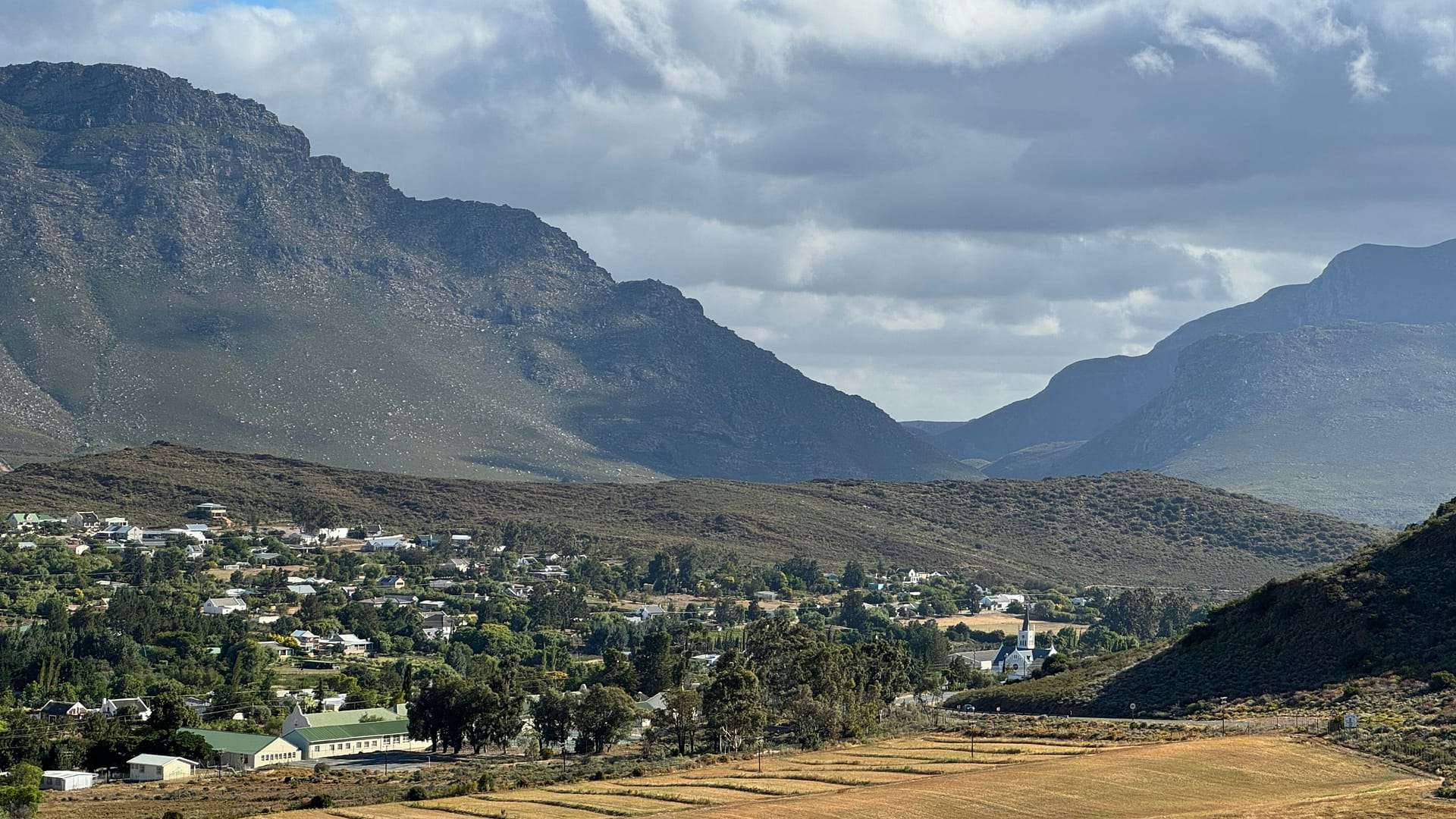
But during my recent trip to the Western Cape in South Africa, I discovered something I wasn’t expecting: becoming different, simply by creating a new identity.
I spent time in a beautiful city in the Western Cape region, a place that rivals many Western cities in elegance and infrastructure. There, the European diaspora has flourished. After generations, now known as Afrikaners, they’ve built an identity of their own. You see it in the street signs, the food, the architecture, and even in the rhythm of daily life.
It’s not Dutch, not German, not French, not English…
It’s Afrikaans.
But long before the Afrikaner identity emerged, the land belonged to the Khoisan, nomadic people who lived from the land, held rich spiritual traditions, and whose presence shaped southern Africa long before colonisation, apartheid, and the long struggle that followed.
We all know, in one way or another, fragments of this story: segregation, resistance, the imprisonment of Nelson Mandela, and the long road to rebirth.
Today, South Africa is a tapestry of ancestries, from Asia to Europe, from the Americas to every region of Africa: west, east, central, and north.
The Migrant Advantage — a Quiet Fire That Builds Nations
Few weeks before my trip, someone told me something I had never heard expressed quite so boldly:
“foreigners often perform better than locals because necessity sharpens their drive.”
At first, I wasn’t sure what to think.
But the longer I stayed in the Western Cape, the more I understood.
The Afrikaners have become very successful, and there’s actually a name for this dynamic: the migrant advantage.
People who leave home rarely travel with comfort.
They travel with purpose.
Migration filters people, those who leave and thrive abroad tend to be the most determined, the most adaptable, and the most willing to take risks. They arrive in a new country with a quiet fire inside them: a need to build, to prove, and to survive.
They can’t afford to be average.
And once you’ve crossed borders, endured transitions, and rebuilt your life in unfamiliar places, your relationship with possibility changes. Nothing feels impossible anymore.
I’ve heard countless stories of Africans making it in the US, reinventing themselves, building businesses, earning degrees, climbing corporate ladders.
But then I wondered:
Does this migrant advantage apply equally to the African diaspora in Europe?
If not, why?
The answer is complex, and honestly, I’m not sure I have the geopolitical depth to fully grasp all the forces at play.
But here’s something clear: research shows that second-generation Africans in Europe often achieve higher levels of education than native-born Europeans. Yet even with equal or superior qualifications, they remain less likely to be employed, due to discrimination, weak social networks, and other structural barriers (link to study at the end).
So the drive is there.
The talent is there.
The hunger is there.
But…
Stories from Stellenbosch
During my stay in South Africa, I had a short conversation with a waitress at a restaurant in Stellenbosch.
When she asked where I was from, I said Cameroon.
When I asked about her, she told me she was born and raised in Stellenbosch, but I sensed a hint of embarrassment, as if she wished she had the chance to explore the world, to chase dreams elsewhere, maybe even to pursue her own personal legend (if you’ve read The Alchemist, you know exactly what I mean).
A few days later, I met a hardworking brother from Malawi who runs a beautiful craft shop. He collaborates with a Cameroonian owner, Djomo Art & Craft. Though I didn’t meet the owner, I spoke at length with my Malawian brother. He told me:
“Sister, when I first arrived in this city 20 years ago, it wasn’t easy for a Black person to find a job here. Even being a waiter was impossible. But things have considerably changed. We’re doing well.”
Stellenbosch is stunning — clean, structured, postcard-perfect, and honestly, everyone is sooo stylish, a pleasure for the eye. But… something was missing.
That warmth.
That soul-connection.
That human electricity you feel without speaking.
It’s something I find naturally in Cameroon.
And interestingly, I found it again somehow in Baltimore.
Smiling at strangers for no reason.
Exchanging compliments with people you’ll never see again.
Just spreading joy.
Human to human.
At first, in the Western Cape, I didn’t feel like I was in “Africa.” But that was my chance to expand my definition of Africa, a continent with many flavours, many identities, many histories, and a vibrant, restless energy.
If I had to give Africa an age, I’d say sixteen, young, fiery, searching for itself, easily influenced, but overflowing with potential.
Leaving the Western Cape — and Returning “Home”
My stay in the Western Cape ended with a long and amazing conversation with an elderly Xhosa man who drove me to the airport. When I told him that his city could rival many European ones, he smiled with pride. Then he added something that struck me:
“We have to admit, most of what you see in the Western Cape was built by Afrikaners during apartheid. These people… they built this country.”
Once again confirming the idea that: people who relocate often carry extraordinary determination and grit.
We spoke about diversity, community, and how Xhosa people continue to honour their ancestors every two or three years as a sign of gratitude.
Then he asked about the weather in Germany.
I told him I would miss the sun, that in Germany the sun rises at 7am and sets at 4pm. To which he exclaimed:
“You live in the darkness, né!”
When he said that, my stomach tightened.
I realised that I was the one longing for “home” this time, not my interlocutor.
I was the one trying to reconnect.
This time, I didn’t bring my cultural magnet.
I was the cultural magnet, searching for ubuntu, for grounding, for roots.
Now I’m back in Germany — from 27°C to 5°C.
For someone who has lived most of her life in 25–28°C climates (yes, equator child here), it’s an adjustment.
But don’t worry, I’m training my thermal plasticity (lol, I couldn’t resist making this joke as an ecologist hahaha).
Sources & Further Reading
- CREAM Migration Study – The labour market outcomes of immigrants and their children in Europe
https://www.cream-migration.org/publ_uploads/CDP_03_11.pdf - On the Migrant Advantage
- Dustmann, C., & Gorlach, J.-S. (2016). Selectivity and the migrant advantage.
- Constant, A., & Zimmermann, K. (2013). Migration, ethnicity, and economic integration.
- On Afrikaner identity
- Giliomee, H. (2003). The Afrikaners: Biography of a People.
- On Khoisan history
- Barnard, A. (1992). Hunters and Herders of Southern Africa.