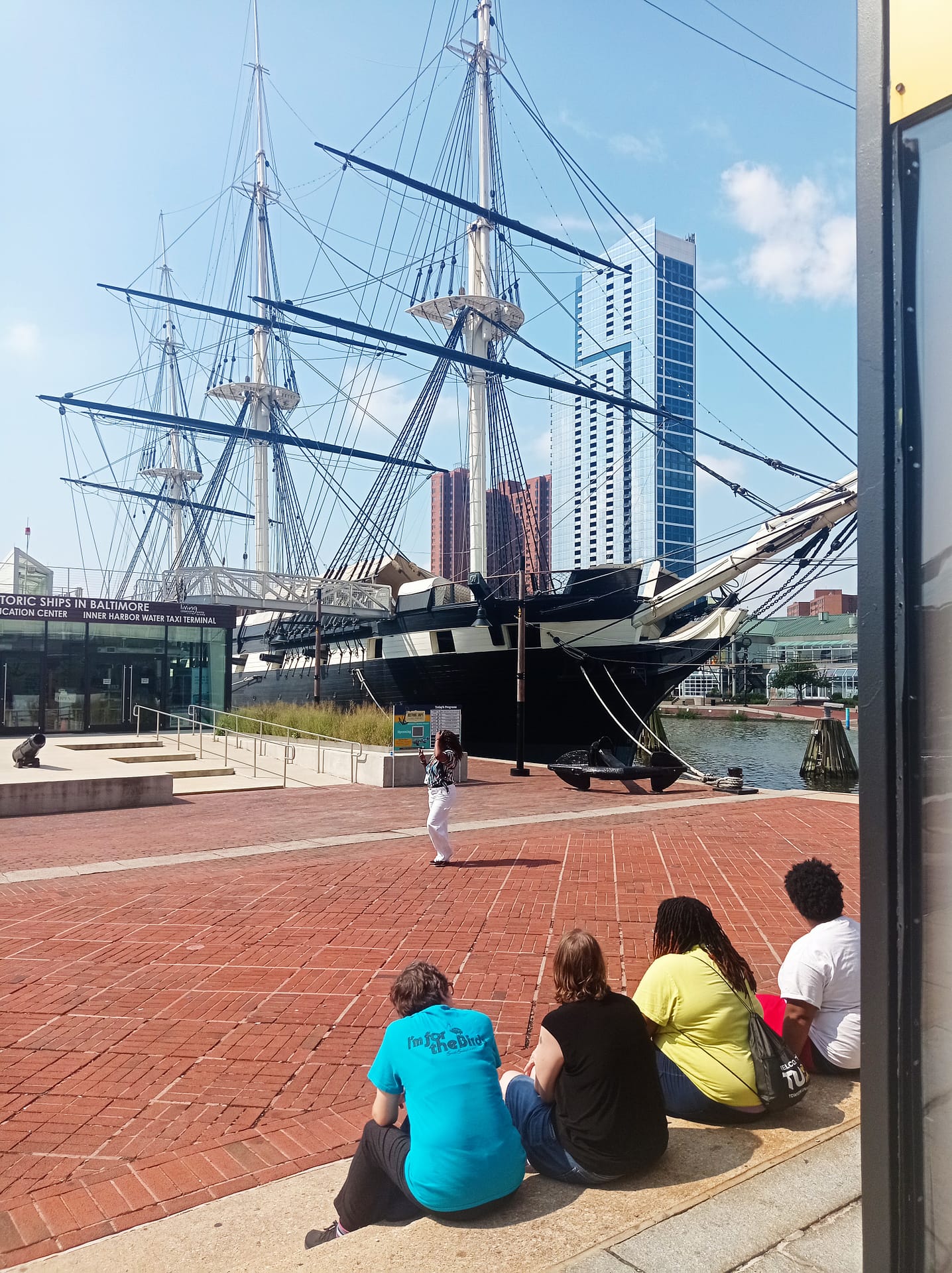
As a blogger exploring African legends, myths, and diasporic threads, my recent trip to Baltimore left a powerful imprint on me, not just as a traveller, but as someone seeking to tell connecting stories.
The first people in Baltimore
Long before the city’s skyline rose over the Inner Harbor, this land was home to the Susquehannock people, a Iroquoian-speaking nation. They lived along the Susquehanna River and into northern Maryland, thriving through agriculture, hunting, and wide trade networks. Surrounding them were other Algonquian-speaking tribes, like the Piscataway and Nanticoke.
These were the original stewards of the land, long before colonial settlers arrived and before “Baltimore” existed as a name.
The first to arrive from Europe
Baltimore was founded in 1729 by European colonists. As the city grew, so did its economy, driven by agriculture, tobacco, and the port. But with that growth came slavery.
Slavery, abolition, African-American resistance, and poverty
It was in Baltimore that Frederick Douglass, one of the greatest voices of Afro-American liberation, spent his formative years as an enslaved youth. His time in Baltimore shaped his views and equipped him with the literacy and awareness that helped him eventually escape and fight for abolition.
“If there is no struggle, there is no progress.” — Frederick Douglass, 1857
Baltimore became a key site for abolitionist, and Afro-American spiritual and intellectual growth.
Today, the city reflects both the scars and strength of that past. About 1 in 5 people in Baltimore live in poverty, with child poverty affecting nearly 1 in 4. Generational inequality, systemic neglect, and housing instability continue to impact Afro-American communities most, the descendants of the same people whose labour built the city.
You feel it in some streets. But you also see resilience: food drives, small businesses, murals, and neighbourly care. Baltimore’s reputation for crime is not undeserved, but it’s also not the full story.
So, I will tell you about my own experience.
My story in Baltimore
I first arrived in Baltimore at night, something I now know is not advisable to do. Downtown Baltimore after dark isn’t one of the most welcoming places. I had no internet, but thankfully I had an offline map with my hotel pinned. It was just five minutes from the train station where I had arrived.
But the moment I stepped off the train, my senses were on high alert. Danger. Danger. Danger.
It felt like being on the “Boulevard du 20 mai” in Yaoundé, Cameroon, at midnight, if you know, you know.
I scanned my surroundings, gripped my 15 kg trolley and backpack, and walked briskly (as I could) toward my hotel. Thankfully, I found it quickly, and the staff were kind, welcoming, and warm. I felt safe inside.
But for the first four days, honestly, I didn’t enjoy Baltimore. There was an “unsafe vibe” everywhere. The omnipresent smell of weed, people with mental health issues wandering the streets… I made sure to be home by 6:30 p.m. every day.
Then came the day I visited the Inner Harbor, and everything changed.
I saw a different Baltimore. Families with children, joggers, tourists, restaurants, boats — a completely different atmosphere. It was during the day, and I don’t know how it might feel at night, but for the first time, I thought:
“Ah… there is another side to Baltimore.”
The Ankara bag: Ghanaian encounters and diaspora connections…
For the past three years, my Ankara bag has been my best travel companion. That bag, with its beautiful Kente pattern, has seen places. It’s my little flag, my cultural magnet.
( The bag in question )
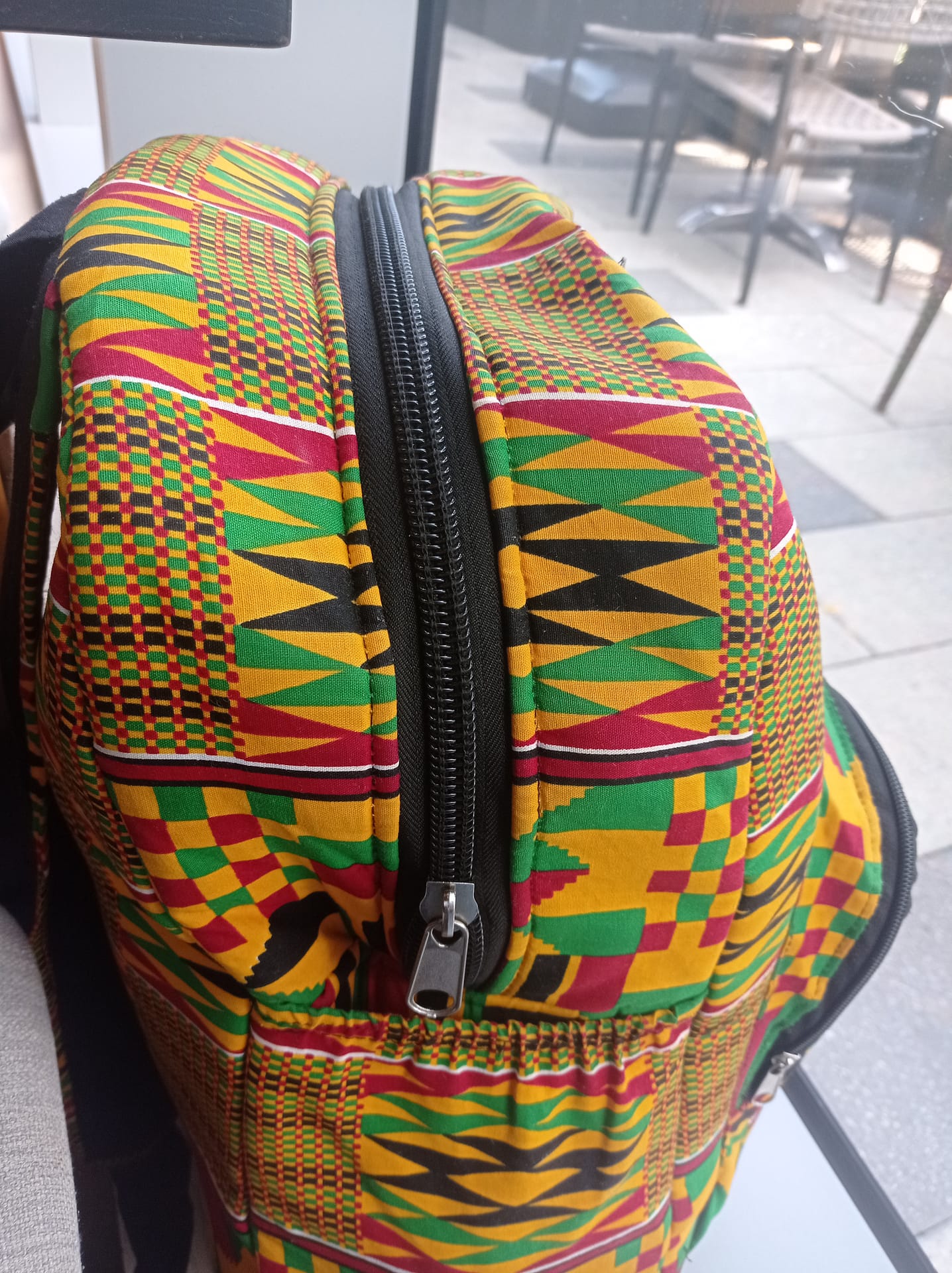
Everywhere I go, people compliment it. Locals admire its colours.
And Ghanaians? They recognise it instantly. Baltimore was no exception.
I had just stepped out of the Baltimore Visitor Center when a man in his 50s, walking with his daughter, saw the bag and asked:
“Are you from Ghana?”
I smiled.
“No, I’m from Cameroon.”
He lit up.
“Ah! I’m from Ghana!”
We spoke casually, laughed a little, shared thoughts about Baltimore. But what struck me most was the nostalgia I saw in his eyes when he looked at the bag. A longing. A memory of home.
After he left, I sat with that feeling.
Living in the Diaspora
Being an immigrant means you are never fully here or there.
You leave home and gain parts of a new world, habits, friends, maybe family, but you also lose a bit of yourself. And sometimes, when you visit home, you find yourself missing the foreign land, because it, too, has shaped you.
It’s a constant negotiation of identity, but also a beautiful exchange. A bit of you is left in others. And a bit of them becomes a part of you.
Final Thoughts :)
Despite uncertain beginnings, the thing I’ll remember most about Baltimore is the people. Their hospitality, their warmth, their resilience.
Sources and references:
Native Peoples & Early Baltimore
- Indigenous History of the Chesapeake – Captain John Smith Chesapeake National Historic Trail (U.S. National Park Service)
- Life in the Indigenous Chesapeake (U.S. National Park Service)
Slavery, Abolition, and Frederick Douglass
- Frederick Douglass “West India Emancipation” Speech https://www.library.rochester.edu/rbscp
Poverty and Crime in Baltimore
African Diaspora & Cultural Context
- Reginald F. Lewis Museum | Protecting Black Art, History & Culture.
- The National Great Blacks in Wax Museum