
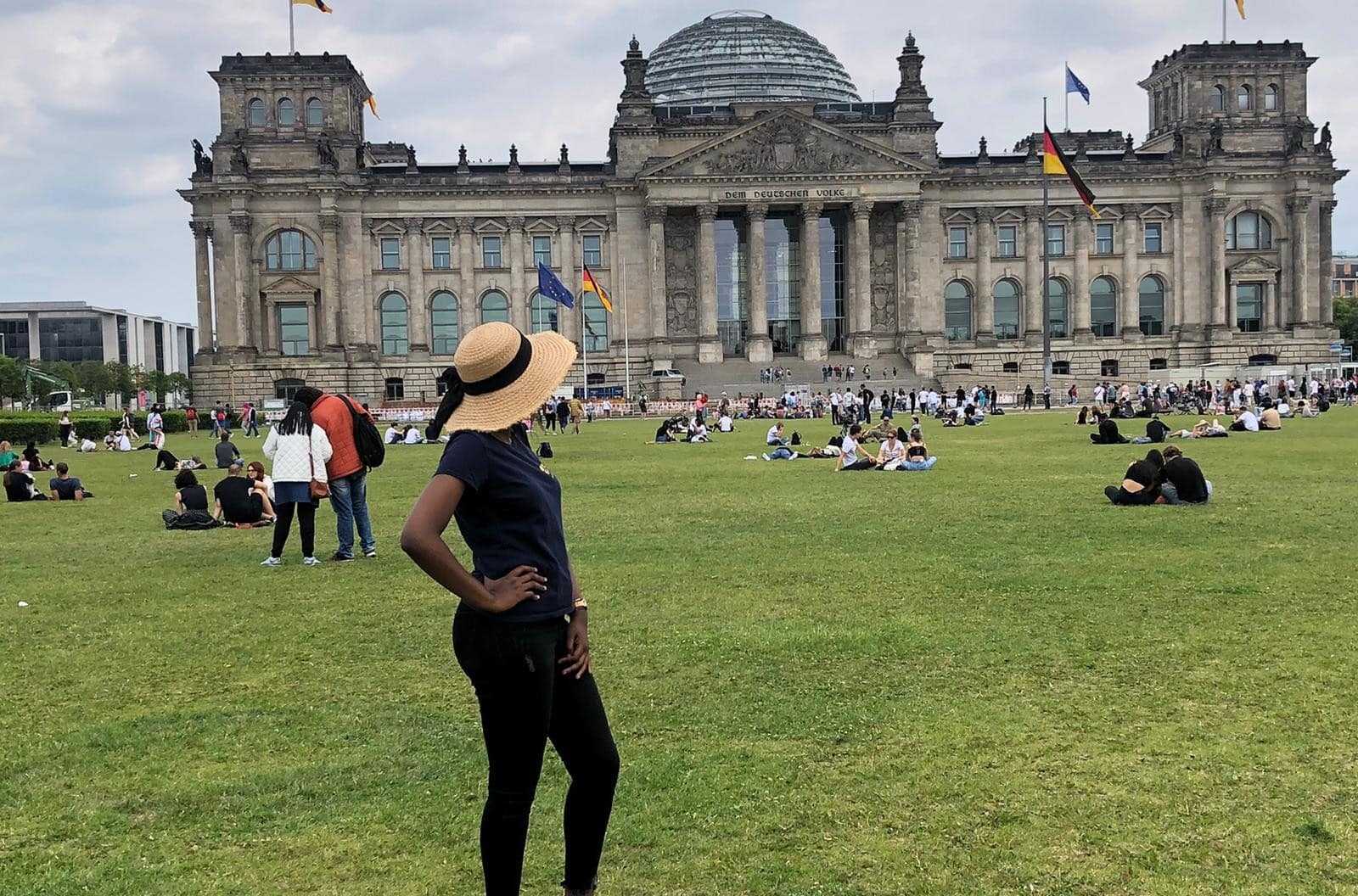
Never thought I would write an ode to Berlin.
There was a time when, if you had told me I would one day write something nice about this city, I probably would have laughed.
I used to judge Berlin.
Not hate.
But judge hard, like my life depended on it.
Why are people always walking around with sad faces? I thought there were no beggars in developed countries. And why do even grandmothers have tattoos here?
Yea, I know better now. Apparently, it’s a cool people city.
For a long time after my arrival in Germany, Berlin, in my mind, was a city of depressed people, grey skies, some not-so-clean areas on the side, and people who looked like they had forgotten that smiling was an option.
And then there was the Berlin everyone kept talking about.
The cool Berlin.
The dark techno clubs. The endless parties. The underground everything. The people dressed in black who looked like they had just walked out of a very serious art exhibition.
I never quite understood the obsession.
Maybe I was looking at the wrong Berlin.
Or maybe Berlin was waiting for me to discover another side of itself.
It took me almost five years.
I’m not a techno person, so apparently I needed another way into Berlin.
Then I discovered Prenzlauer Berg.
One day, I found myself walking through Prenzlauer Berg and thought:
Wait… is this also Berlin?
Because suddenly, everything looked different.
The hipster dream.
Pretty streets.
Beautiful old buildings.
Little cafés.
Bio restaurants where you can get good organic bread and fresh beetroot juice and somehow feel that you have your life together.
Second-hand shops with beautiful clothes where, if you like pretty things, you might actually find yourself running late because you are busy admiring a dress you have absolutely no intention of buying.
People sitting outside cafés.
Young parents pushing colourful prams.
People walking dogs.
People working on laptops.
People having brunch as if brunch were a serious life project.
It felt vibrant.
But not in that dark, 3 a.m. Berlin way that, to me, smelled of tobacco and weed.
It was a softer kind of vibrancy.
And I liked it.
A lot.
Berlin’s own description of Prenzlauer Berg is almost funny in this context. The neighbourhood went from being relatively neglected to becoming known for its cafés, restaurants, bars, galleries and shops, with areas around Kollwitzplatz and Helmholtzplatz particularly popular.
But what really changed for me wasn’t the cafés.
It was the realisation that I had been judging an entire city by one version of it.
And isn’t that something we do with people too?
You meet someone once, under the wrong circumstances, and decide who they are.
You visit a country once and decide you don’t like it.
You spend time in one neighbourhood and think you understand the whole city.
But cities are not single personalities.
They are collections of people.
Communities.
Kieze.
Little worlds sitting next to one another.
I have come to like this German idea of a Kiez — a neighbourhood that can feel almost like its own little world.
Berlin makes this particularly obvious. You can move from one neighbourhood to another and suddenly feel like you’ve entered a different city.
The same Berlin that has trendy cafés, organic restaurants and beautifully renovated buildings also has post-war housing estates, quiet residential streets, artists’ communities, immigrant neighbourhoods, parks, industrial spaces and areas that are still figuring out what they want to become.
And perhaps this is also why Berlin can be such a fascinating city to live in.
You can walk through a beautiful neighbourhood, admire the cafés and old buildings, and then suddenly remember that almost every corner has a story behind it.
I was reminded of this when Anton-Wilhelm-Amo-Straße replaced the old name Mohrenstraße in the Mitte district (story here) .
I think I am beginning to understand this city differently.
What I like about Berlin now is not necessarily the Berlin that people sell you when they tell you to come here.
I don’t need the dark techno basement at 3 a.m.
Give me a colourful street.
Give me a little family-owned restaurant.
Give me a beautiful second-hand shop.
Give me people creating their own little communities.
Give me a neighbourhood where I can walk without a destination and suddenly think:
Oh, this is nice.
I like the rainbow of Berlin.
And maybe that is the strange thing about this city.
There is so much darkness associated with Berlin—historically, culturally, even aesthetically.
But perhaps that’s exactly why the colourful parts stand out so much.
Maybe the logic of Berlin is:
From the darkness comes the rainbow.

 English (UK)
  Français